
Affiliate Disclosure: Some links in the RVBN Business Book Library may be affiliate links. If you purchase through one of these links, RVBN may receive a small commission at no additional cost to you. We recommend books because we believe they may be useful to our members, Our members use our link to help support RVBN.
Effectiveness Starts With How You Choose to Operate
It's easy to look for a new technique, productivity tool, or shortcut when we want better results.
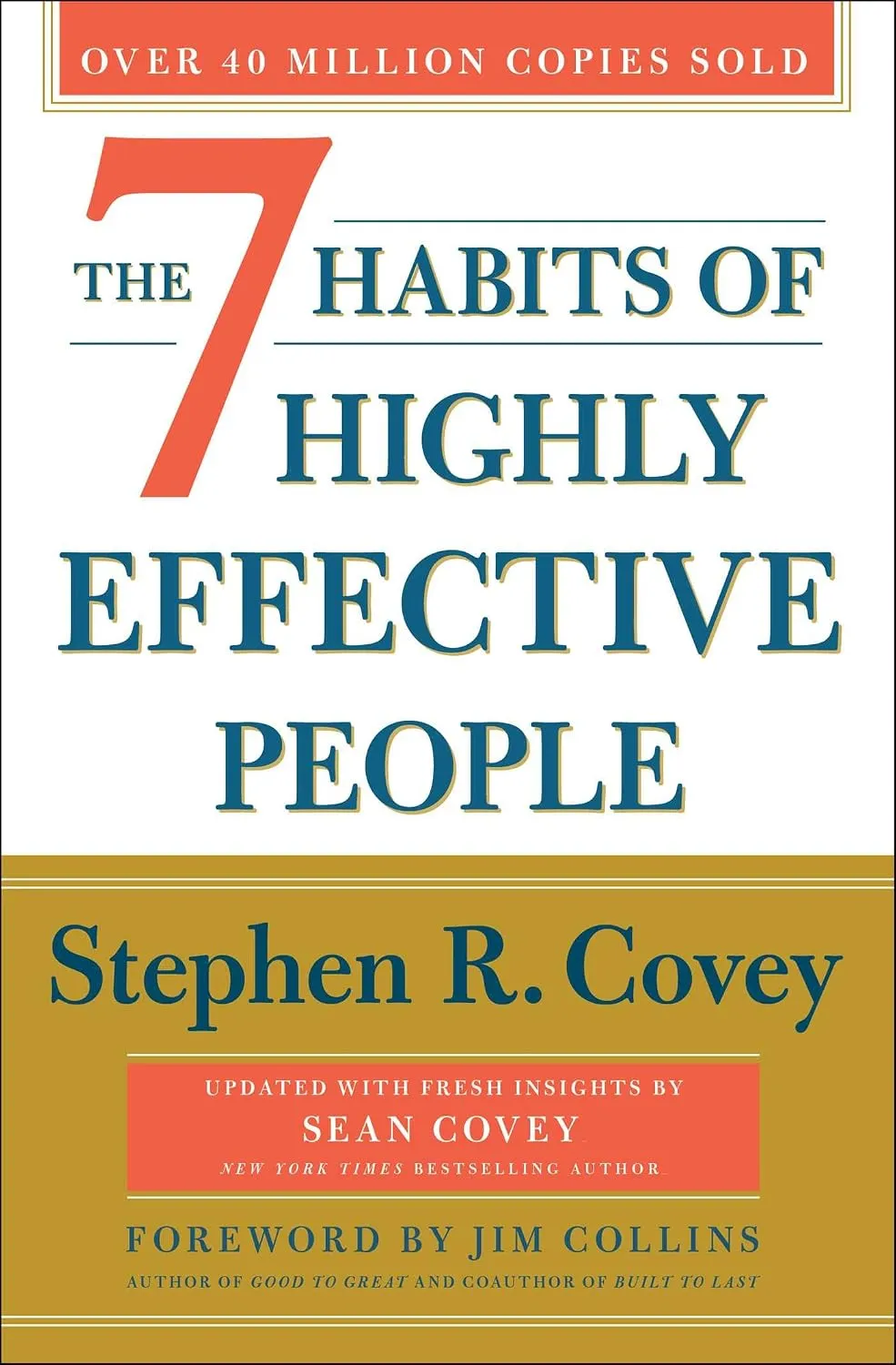
The 7 Habits of Highly Effective People takes a deeper approach.
Stephen R. Covey argues that lasting effectiveness comes from principles and habits that shape how we make decisions, establish priorities, work with other people, and respond to circumstances.
The book isn't simply about getting more done. It's about becoming more deliberate about what you do, why you do it, and how you work with others along the way.
What This Book Is About
Covey organizes the book around seven habits that move from personal responsibility to working effectively with others and, finally, continual improvement.
The seven habits are:
Be Proactive — Take responsibility for your choices and responses.
Begin with the End in Mind — Know where you're trying to go before deciding how to get there.
Put First Things First — Give your most important priorities the attention they deserve.
Think Win-Win — Look for outcomes that create value for everyone involved.
Seek First to Understand, Then to Be Understood — Listen before trying to persuade.
Synergize — Use different perspectives and strengths to create better solutions.
Sharpen the Saw — Continually renew and improve your capabilities.
Together, they provide a framework for becoming more effective personally and in relationships with other people.
Why RVBN Recommends It
Business owners constantly make decisions under circumstances they don't completely control.
Customers cancel. Employees make mistakes. Competitors change. Equipment breaks. Opportunities appear. Plans fail.
Covey's principles help separate what you can influence from what you can't and encourage you to concentrate your energy accordingly.
The book is equally valuable when dealing with people. Listening well, establishing mutually beneficial relationships, setting priorities, and knowing what you're trying to accomplish are useful whether you're working with customers, employees, vendors, partners, or other business owners.
Who Should Read This Book?
This book may be especially useful if:
You feel like you're constantly reacting instead of deciding.
Urgent tasks regularly push aside important ones.
You want to become more intentional about your priorities.
You manage employees or work closely with customers.
You want to improve communication and relationships.
You find yourself spending too much energy on things outside your control.
You're looking for principles that apply to both business and personal life.
One Big Idea
Focus your energy on what you can influence.
Covey distinguishes between our Circle of Concern and our Circle of Influence.
Your Circle of Concern contains everything you care about: the economy, competitors, interest rates, customer behavior, regulations, other people's opinions, and countless other things.
Your Circle of Influence contains the things you can actually do something about.
Business owners can spend enormous amounts of energy worrying about the first circle while neglecting the second.
You may not control the economy.
But you can improve your customer experience.
You can't control a competitor's prices.
But you can improve the value you provide.
You can't control every problem that occurs.
But you can control how you respond to it.
Put It Into Practice
Write down the three issues currently causing you the most frustration in your business.
For each one, ask:
What part of this can I actually control or influence?
Then identify one action you can take.
Next, look at your priorities.
Ask yourself:
What important work keeps getting postponed because something more urgent always appears?
Schedule time for it before the week fills up.
Finally, during your next difficult conversation with a customer, employee, or vendor, deliberately try one of Covey's simplest principles:
Understand their position before explaining yours.
Ask questions. Listen. Repeat back what you believe they're saying.
Then respond.
The seven habits aren't really a checklist you complete.
They're practices you return to repeatedly—and that's what makes them habits.