Affiliate Disclosure: Some links in the RVBN Business Book Library may be affiliate links. If you purchase through one of these links, RVBN may receive a small commission at no additional cost to you. We recommend books because we believe they may be useful to our members, Our members use our link to help support RVBN.
Small Changes Can Produce Big Results
When we want something to change, we tend to focus on the result we want.
Get more customers. Exercise more. Become more organized. Save more money. Stop procrastinating.
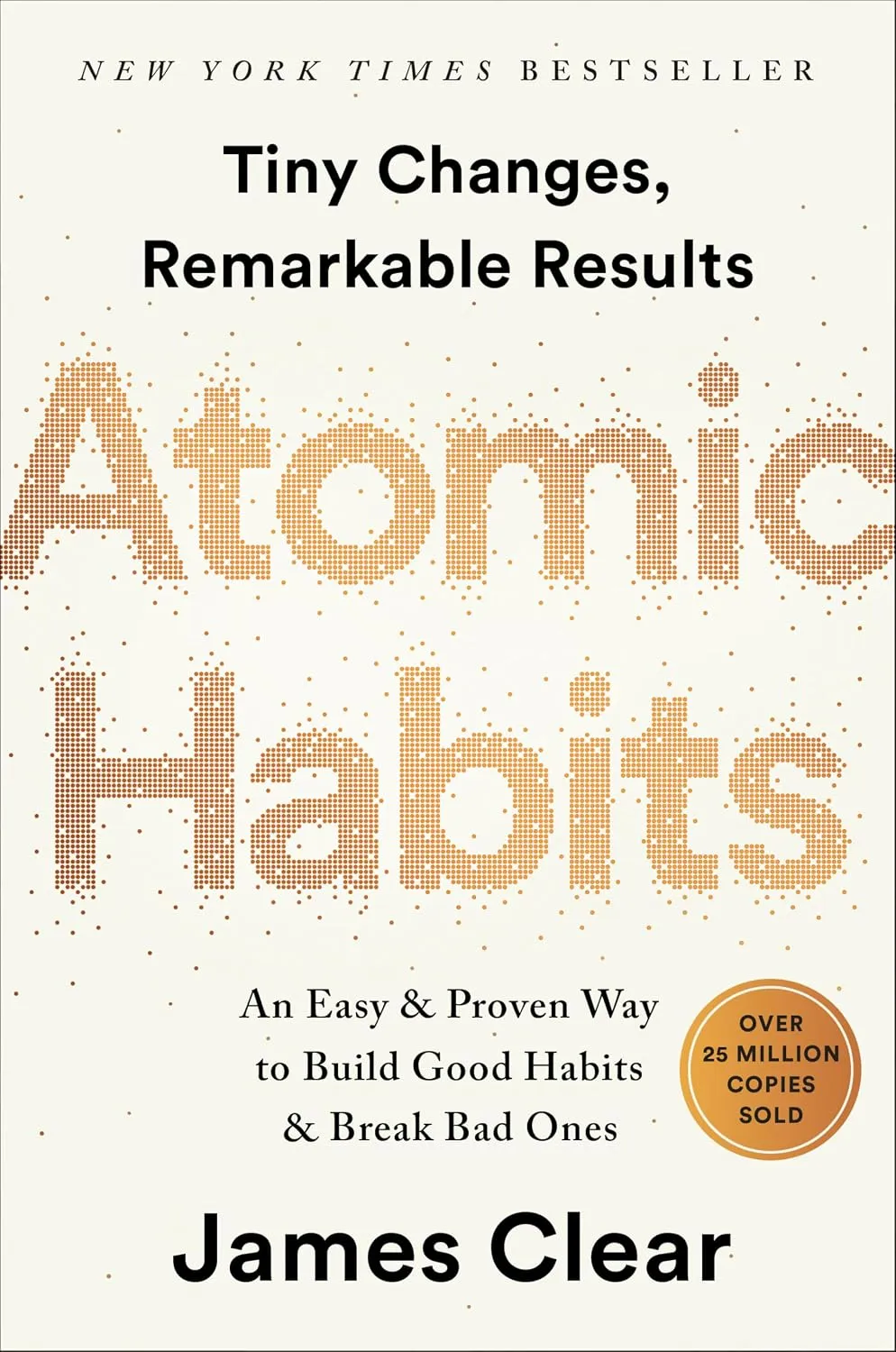
Atomic Habits approaches change from a different direction. James Clear argues that meaningful improvement often comes from making small changes to the systems and habits that produce our results, then repeating those changes consistently.
The individual improvement may seem insignificant. The power comes from what happens when small improvements accumulate over time.
What This Book Is About
Atomic Habits explores how habits are formed, why they become difficult to change, and how we can intentionally design better ones.
Clear describes a four-part habit cycle: cue, craving, response, and reward. He then builds a practical framework around that cycle for making desirable behaviors easier and undesirable behaviors harder.
One of the book's most useful distinctions is between goals and systems.
Goals describe the result you want.
Systems describe what you repeatedly do to produce that result.
The book argues that lasting improvement depends less on continually setting bigger goals and more on creating better systems.
Why RVBN Recommends It
Running a small business involves hundreds of repeated behaviors.
Following up with leads. Checking the numbers. Asking for reviews. Returning calls. Planning the week. Maintaining equipment. Posting on social media. Following up with previous customers.
Most of these aren't difficult once.
The challenge is doing them consistently.
Atomic Habits provides a useful framework for turning important activities into routines instead of repeatedly relying on motivation or memory.
That makes it much more than a personal-productivity book. Its principles can be applied to how an entire business operates.
Who Should Read This Book?
This book may be especially useful if:
You frequently start new routines but have trouble maintaining them.
Important business tasks keep getting pushed aside by urgent work.
You rely too much on motivation or willpower.
You want to become more consistent without making dramatic changes.
You're trying to replace an unproductive behavior with a better one.
You want better systems in both your business and personal life.
One Big Idea
Focus on becoming the kind of person who naturally does the things you want to do.
Clear calls this identity-based habits.
Instead of only saying:
"I want to read more."
You begin thinking:
"I'm a person who reads every day."
For a business owner, that might mean moving from:
"I need to follow up with customers more often."
to:
"We are a company that always follows up."
Each repetition becomes a small piece of evidence supporting that identity.
Over time, the behavior becomes less about completing another task and more about how you operate.
Put It Into Practice
Choose one small behavior that would improve your business if you performed it consistently.
Keep it small.
Maybe it's:
Spend five minutes reviewing yesterday's numbers every morning.
Ask every satisfied customer for a review.
Follow up with every new lead before ending the workday.
Write tomorrow's three priorities before leaving work.
Then make the behavior easier to perform.
Give it a specific time or trigger.
Put whatever you need somewhere visible.
Attach it to something you already do consistently.
Track whether you actually do it.
And resist the temptation to make the habit bigger too quickly.
The question isn't:
"How much can I change this week?"
It's:
"What small improvement can I repeat long enough for it to become normal?"
Small changes aren't very impressive on the first day.
Their value comes from still being there on the hundredth.