
Affiliate Disclosure: Some links in the RVBN Business Book Library may be affiliate links. If you purchase through one of these links, RVBN may receive a small commission at no additional cost to you. We recommend books because we believe they may be useful to our members, Our members use our link to help support RVBN.
Being Busy Isn't the Same as Making Progress
Small-business owners rarely struggle to find things to do.
There are customers to serve, calls to return, employees to manage, bills to pay, marketing to handle, problems to solve, and opportunities constantly competing for attention.
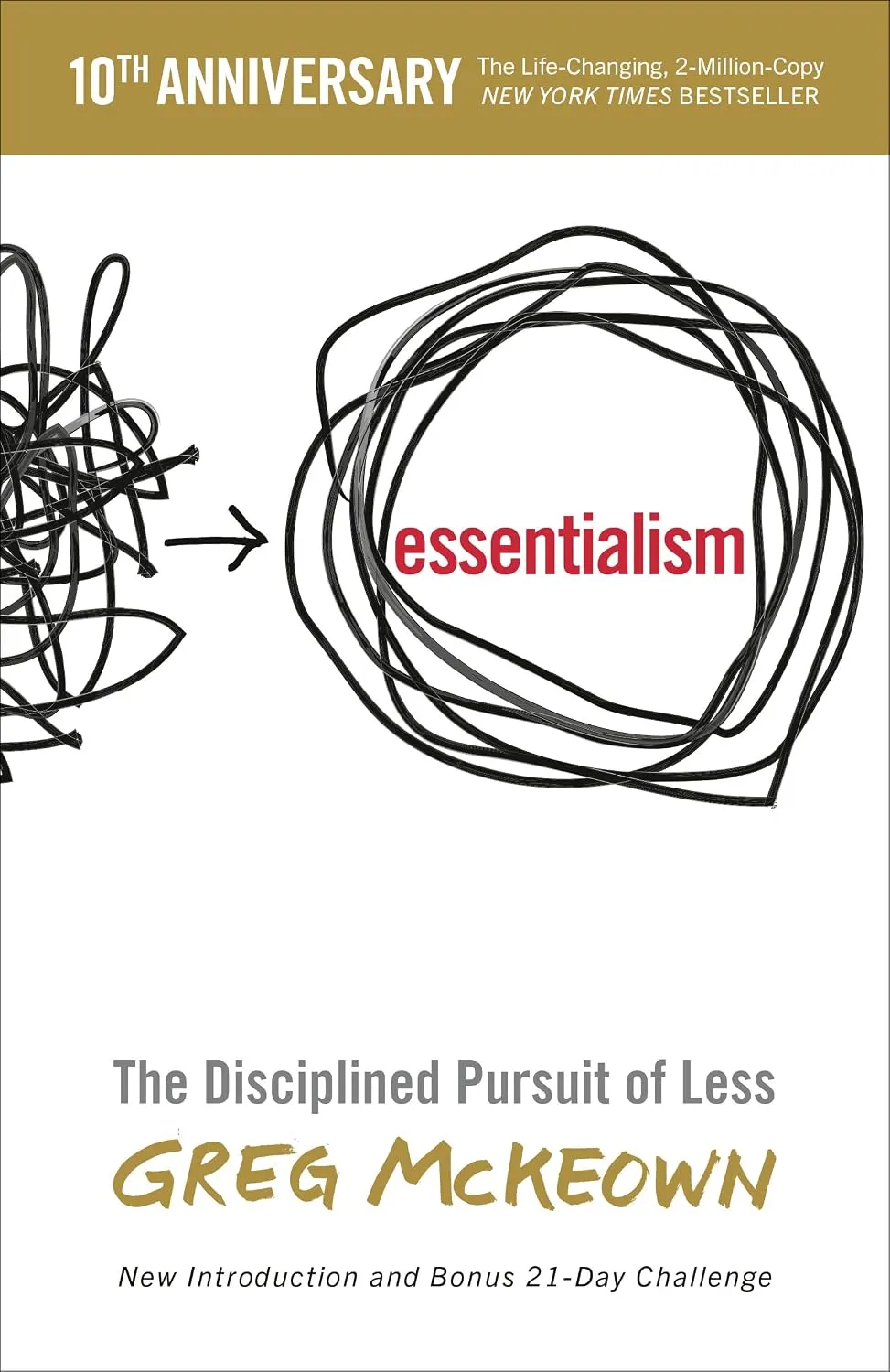
Essentialism challenges the assumption that the answer is simply learning how to accomplish more.
Greg McKeown argues for something different: do fewer things, but deliberately choose the things that matter most.
It's not about being lazy or lowering your ambitions. It's about recognizing that your time, attention, and energy are limited resources—and deciding where they will create the greatest value.
What This Book Is About
Essentialism is about separating the vital few from the trivial many.
McKeown argues that when we don't deliberately establish our own priorities, other people and circumstances will establish them for us.
Every opportunity isn't equally valuable. Every request doesn't deserve a yes. Every problem doesn't require your personal involvement.
Essentialism involves creating enough space to evaluate your choices, identifying what is genuinely important, eliminating things that aren't, and making it easier to execute on the things that remain.
The objective isn't simply doing less.
It's doing more of what matters.
Why RVBN Recommends It
Small-business ownership makes essentialism particularly difficult.
When you're responsible for the company, almost everything can feel important.
A new service sounds promising. A customer asks for an exception. Someone wants a meeting. A new marketing platform appears. An employee needs help. Another opportunity comes along.
Individually, each decision may seem reasonable.
Collectively, they can leave an owner stretched across so many priorities that none receive enough attention.
Essentialism provides a useful framework for questioning those demands instead of automatically accepting them.
Sometimes improving a business isn't about adding something new.
Sometimes it's about deciding what to stop doing.
Who Should Read This Book?
This book may be especially useful if:
You're constantly busy but don't feel like you're making enough progress.
You have difficulty saying no.
Your business offers too many services or pursues too many types of customers.
Your schedule is controlled primarily by other people's priorities.
You frequently start new projects before finishing existing ones.
Important work gets crowded out by urgent but less important tasks.
You want more control over where your time and attention go.
One Big Idea
If you don't prioritize your life, someone else will.
Every yes consumes something.
It may consume time, money, attention, energy, or the opportunity to say yes to something more important later.
That means the real cost of an opportunity isn't simply what it requires.
It's also what you won't be able to do because you chose it.
For a business owner, that can mean turning down a customer who isn't a good fit, eliminating an unprofitable service, declining another meeting, or abandoning a project that no longer supports where the company is going.
Saying no isn't always negative.
Sometimes it's how you protect the things you've already decided deserve a yes.
Put It Into Practice
Look at everything currently competing for your attention.
Your projects. Services. Marketing activities. Meetings. Customers. Commitments. Recurring tasks.
Then ask:
If I weren't already doing this, would I choose to start doing it today?
If the answer is no, ask why you're continuing.
Then identify the three things that would make the greatest difference to your business over the next 90 days.
Compare those priorities with where your time actually went last week.
Do they match?
If your biggest priority receives two hours while less important activities consume thirty, the problem may not be productivity.
It may be prioritization.
Finally, identify one thing you can stop doing.
Essentialism isn't about finding enough time to do everything.
It's accepting that you can't—and deliberately deciding what deserves your time anyway.