
Affiliate Disclosure: Some links in the RVBN Business Book Library may be affiliate links. If you purchase through one of these links, RVBN may receive a small commission at no additional cost to you. We recommend books because we believe they may be useful to our members, Our members use our link to help support RVBN.
What This Book Is About
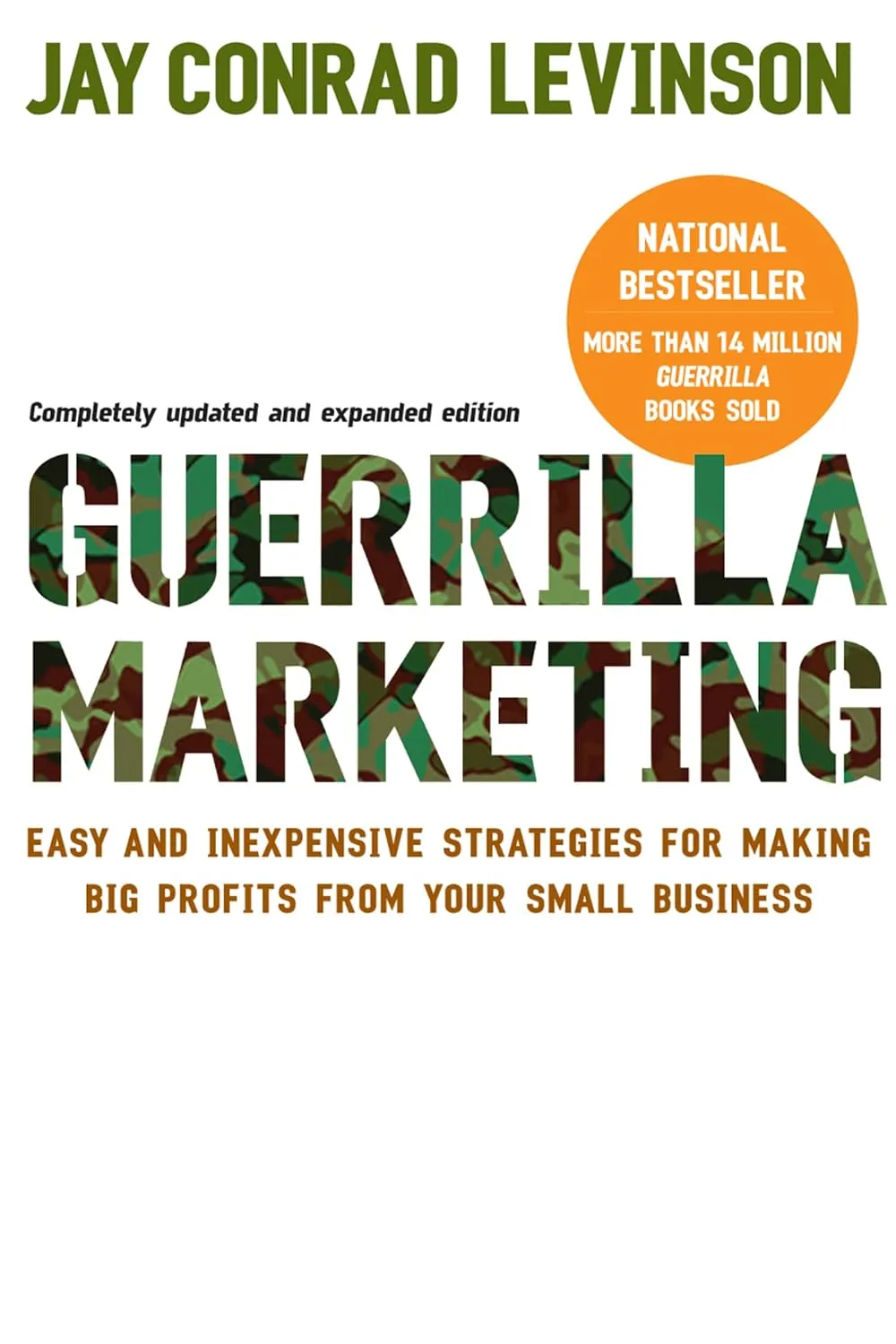
Guerrilla Marketing is built around a simple idea: small businesses don't have to compete with large companies by spending like large companies.
Instead, Jay Conrad Levinson emphasizes creativity, persistence, relationships, time, energy, and unconventional marketing tactics. The goal isn't necessarily to reach the largest possible audience. It's to find practical, affordable ways to get noticed by the right people and turn that attention into customers.
Many of the specific tools available to business owners have changed since Guerrilla Marketing was first written, but the underlying philosophy remains remarkably relevant: use ingenuity when you can't—or don't want to—outspend the competition.
Why RVBN Recommends It
Small-business owners often think effective marketing requires a large advertising budget. Guerrilla Marketing challenges that assumption.
What makes the book particularly useful is the mindset behind the tactics. Levinson encourages business owners to look for overlooked opportunities, make better use of resources they already have, build relationships, experiment, and consistently market their businesses rather than waiting for customers to appear.
Some of the tactics in the book reflect the era in which it was written. But many of the principles translate naturally into today's world of social media, email, online reviews, local search, community groups, inexpensive automation, and digital communication.
That's part of what makes this book interesting today: the tools have changed dramatically, but many of the ideas haven't.
Who Should Read This Book?
This book may be especially useful if you:
Own a small or local business with a limited marketing budget.
Believe you need expensive advertising to compete.
Want alternatives to simply buying more ads.
Are willing to experiment with unconventional ways of attracting customers.
Want to make better use of relationships, referrals, partnerships, and community involvement.
Enjoy looking at older marketing ideas and asking how they could be adapted to today's technology.
One Big Idea
You don't necessarily need more money. You need more ways to use what you already have.
A small business may not have the advertising budget of a large competitor, but it often has advantages of its own.
You can be more personal.
You can experiment faster.
You can build genuine local relationships.
You can notice opportunities a larger company might ignore.
You can change direction without layers of approval.
Guerrilla marketing is largely about learning to recognize and exploit those advantages.
Put It Into Practice
Instead of asking, "How much should I spend on advertising?" start with a different question:
"What opportunities to market my business am I currently overlooking?"
Look at the resources you already have.
Customers: Are you actively asking happy customers for reviews and referrals?
Relationships: Are there complementary local businesses you could partner with?
Community: Could you teach something, sponsor something, participate in a local group, or become a useful resource?
Knowledge: Could something you know become a helpful article, short video, checklist, workshop, or social post?
Follow-up: How many potential customers have contacted you in the past but never heard from you again?
Technology: Which old guerrilla-marketing ideas could now be accomplished more easily with email, social media, texting, online communities, or automation?
Pick one inexpensive idea and actually try it. Measure what happens. Improve it. Then try another.
That's much closer to the spirit of guerrilla marketing than simply collecting a long list of clever marketing ideas.
Ready to Read It?
Guerrilla Marketing, 4th Edition by Jay Conrad Levinson is worth reading not because every tactic is timeless, but because its central challenge still matters:
How can a small business compete using creativity, persistence, and resourcefulness instead of simply spending more money?
And when we eventually read this one in Cy's Book Club, I think there's an obvious discussion theme: Which guerrilla-marketing ideas can we reinvent using the tools available to a small business today?