
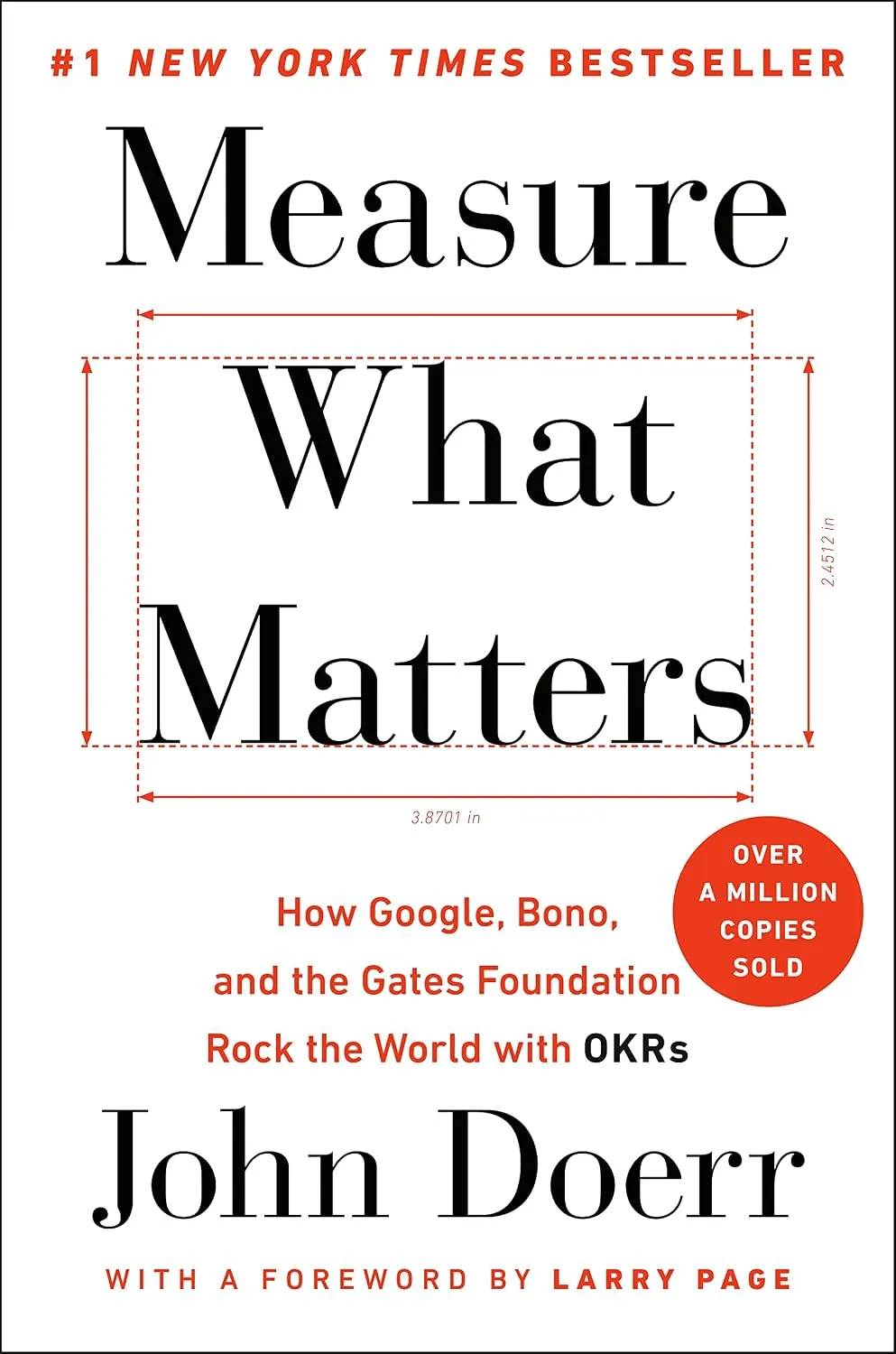
Measure What Matters: How Google, Bono, and the Gates Foundation Rock the World with OKR's
Affiliate Disclosure: Some links in the RVBN Business Book Library may be affiliate links. If you purchase through one of these links, RVBN may receive a small commission at no additional cost to you. We recommend books because we believe they may be useful to our members, Our members use our link to help support RVBN.
What This Book Is About
Measure What Matters is about turning ambitious goals into measurable action.
John Doerr introduces Objectives and Key Results (OKRs), a goal-setting system used by organizations ranging from startups to major companies. The idea is straightforward: decide what you want to accomplish, then identify specific, measurable results that will tell you whether you're actually making progress.
The book uses stories from organizations such as Google, Intel, and others to show how OKRs can create focus, alignment, accountability, and momentum.
But you don't need to run a large company to use the idea. The same approach can help a small-business owner stop juggling dozens of priorities and concentrate on the few things that matter most.
Why RVBN Recommends It
Small-business owners rarely suffer from a shortage of things to do. The bigger problem is deciding which things deserve attention.
It's easy to spend an entire week answering emails, putting out fires, dealing with customers, posting on social media, and handling administrative work—then realize very little happened that actually moved the business forward.
Measure What Matters provides a framework for separating activity from progress.
Instead of simply creating a long to-do list, you identify an important objective and decide in advance how you'll know whether you've achieved it.
That's a useful discipline for businesses of almost any size.
Who Should Read This Book?
This book may be especially useful if you:
Have too many competing priorities.
Set goals but have difficulty following through on them.
Manage employees or a small team.
Want everyone working toward the same outcomes.
Find yourself measuring activity instead of results.
Are trying to turn a broad business goal into specific actions.
Want a simple framework for reviewing progress regularly.
One Big Idea
A goal becomes much more useful when you define how you'll measure success.
An Objective describes what you want to accomplish.
The Key Results tell you whether you're getting there.
For example:
Objective: Build a stronger local reputation for the business.
Possible Key Results:
Receive 20 new Google reviews this quarter.
Maintain an average rating of at least 4.5 stars.
Respond to 100% of new reviews.
Ask every satisfied customer for a review.
Now “improve our reputation” isn't just an aspiration. You've defined what progress looks like.
That's the power of the system.
Put It Into Practice
Choose one important result you want your business to achieve over the next 90 days.
Write it as your Objective.
Then ask:
How will I know if I've actually accomplished this?
Choose three or four measurable Key Results.
For example:
Objective: Generate more repeat business.
Key Results:
Contact 100 previous customers.
Generate 20 repeat appointments.
Increase repeat-customer revenue by 15%.
Collect email addresses from 90% of new customers.
Then review those numbers regularly.
The purpose isn't to create another complicated management system. It's to create a simple habit:
Decide what matters. Measure it. Review it. Adjust.
If a Key Result isn't moving, you know where attention is needed.
And if you're constantly busy but none of the Key Results are improving, that's useful information too.
Ready to Read It?
Measure What Matters by John Doerr is worth reading for business owners who want to become more deliberate about where they spend their time and how they define progress.
You don't have to adopt a corporate OKR program or use every technique in the book. Even the basic practice of choosing a few meaningful objectives and attaching measurable results to them can change the way you think about running a business.