
The One Minute Manager: A Timeless Guide to management, Stress Reduction, and Success in a Rapidly Changing Workplace
Affiliate Disclosure: Some links in the RVBN Business Book Library may be affiliate links. If you purchase through one of these links, RVBN may receive a small commission at no additional cost to you. We recommend books because we believe they may be useful to our members, Our members use our link to help support RVBN.
What This Book Is About
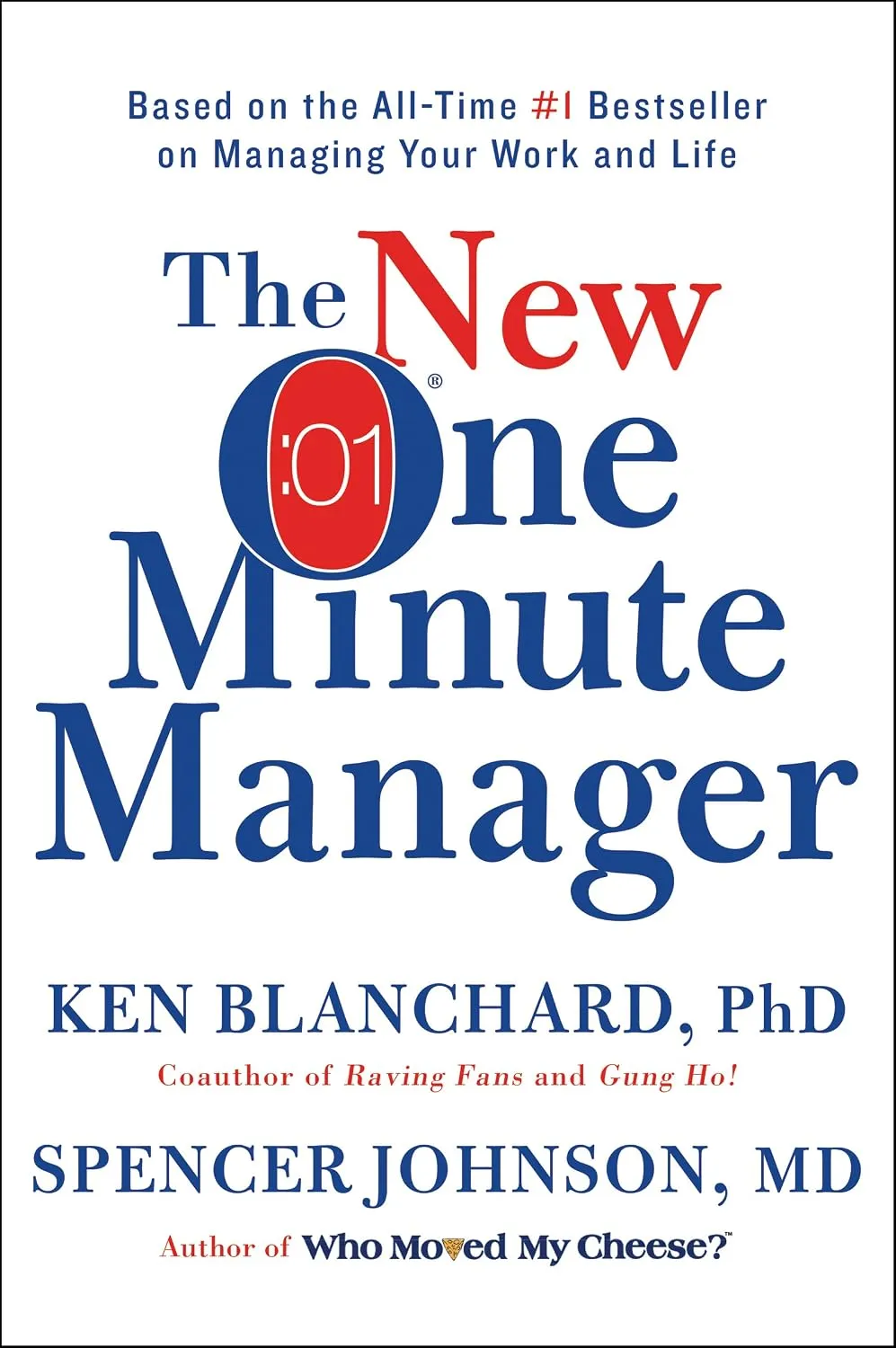
The New One Minute Manager is a short, straightforward book about getting good results from people without turning management into something unnecessarily complicated.
Ken Blanchard and Spencer Johnson present the ideas through a simple story about a young person searching for an effective manager. Along the way, the book introduces three basic management practices centered on setting clear expectations, recognizing good performance, and addressing problems quickly.
The central idea is that good management doesn't necessarily require elaborate systems or constant supervision. People perform better when they understand what is expected, receive useful feedback, and know where they stand.
For a small-business owner managing employees while also handling customers, sales, operations, and everything else, that simplicity has obvious appeal.
Why RVBN Recommends It
Many small-business owners become managers without ever receiving any training in management.
One day you're doing the work yourself. Then you hire someone to help. Suddenly you're responsible for explaining expectations, evaluating performance, correcting mistakes, motivating people, and dealing with problems you've never encountered before.
It's easy to fall into one of two extremes.
Some owners micromanage everything because they're afraid employees won't do the job correctly.
Others provide very little direction and become frustrated when employees fail to meet expectations that were never clearly communicated.
The New One Minute Manager offers a simpler middle ground: establish clear expectations, pay attention to performance, and communicate quickly when something is going right or wrong.
Who Should Read This Book?
This book may be especially useful if you:
Have recently hired your first employee.
Manage a small team.
Struggle with giving employees feedback.
Find yourself constantly correcting the same problems.
Have employees who aren't sure what's expected of them.
Tend to wait too long before addressing performance issues.
Want a simple introduction to managing people without reading a 400-page management textbook.
One Big Idea
People perform better when they know what success looks like and receive feedback while there's still time to act on it.
Managers sometimes assume employees understand exactly what they're supposed to accomplish.
Employees may have a very different understanding.
That creates an avoidable problem: the employee thinks they're doing fine while the manager quietly becomes increasingly frustrated.
Clear expectations reduce that ambiguity.
Then feedback closes the loop.
When someone does something well, acknowledge it.
When something isn't working, address it.
Don't save everything for an annual performance review six months after it happened.
Good management should be an ongoing conversation.
Put It Into Practice
Choose one employee—or, if you have a larger team, one role within your company.
Ask yourself:
What are the three most important results I expect from this person?
Write them down in plain language.
Then ask the employee to describe what they believe their three most important responsibilities or outcomes are.
Compare the answers.
You may discover that something you consider extremely important barely registers on their list.
Once expectations are clear, pay more attention to what happens next.
When you see someone doing something particularly well, tell them specifically what they did right and why it matters.
When performance falls short, don't allow frustration to accumulate for weeks. Address the specific behavior or result promptly, clarify what needs to change, and then move forward.
The objective isn't to constantly praise or criticize employees.
It's to eliminate the uncertainty of:
"Am I doing what my manager expects?"
Ready to Read It?
The New One Minute Manager by Ken Blanchard and Spencer Johnson is a quick read with intentionally simple ideas.
Experienced managers may recognize many of the principles immediately. But for a small-business owner who suddenly finds themselves responsible for managing other people, simplicity can be a strength.
You don't need to become a management expert overnight.
Start by making expectations clear, noticing good work, and dealing with problems before they become bigger ones.