Affiliate Disclosure: Some links in the RVBN Business Book Library may be affiliate links. If you purchase through one of these links, RVBN may receive a small commission at no additional cost to you. We recommend books because we believe they may be useful to our members, Our members use our link to help support RVBN.
What This Book Is About
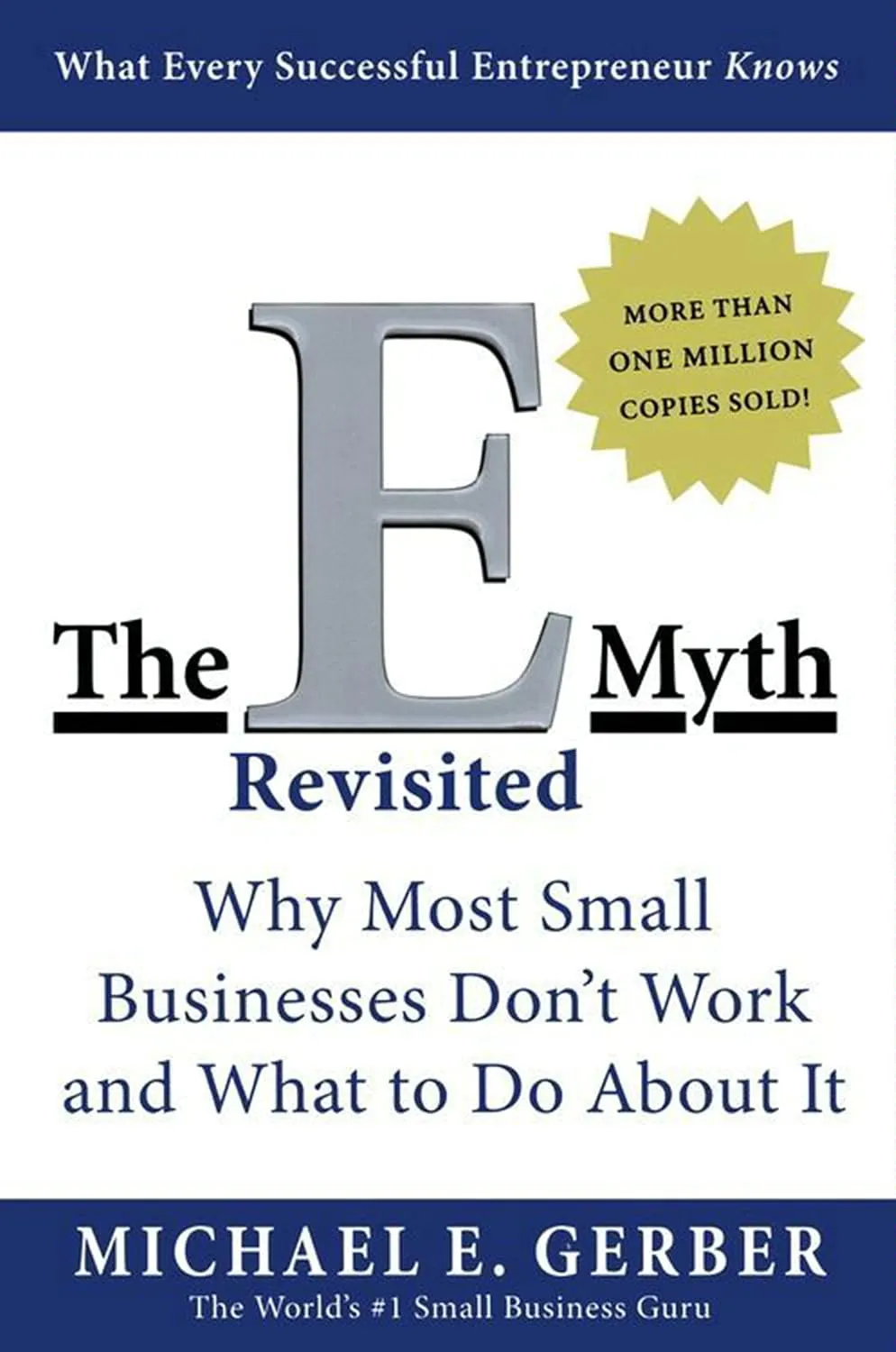
The E-Myth Revisited challenges one of the most common assumptions about entrepreneurship: being good at the work of a business does not necessarily mean you know how to build and run a business.
Michael E. Gerber describes what he calls the Entrepreneurial Myth—the idea that many businesses are started by people who are skilled technicians in their trade or profession and assume that skill will naturally translate into business success.
A great carpenter opens a construction company. A talented baker opens a bakery. A skilled mechanic opens a repair shop.
Before long, they discover they haven't simply created a business. They've created a job for themselves—often one with longer hours, greater risk, and more responsibilities than the job they left.
Gerber's solution is to begin building the business as a system, rather than allowing everything to depend on the owner.
Why RVBN Recommends It
This book addresses a problem that affects countless small businesses: the owner becomes the business.
They answer the phone. They prepare estimates. They perform the work. They solve customer problems. They order supplies. They handle employees. They send invoices. They do the marketing.
Eventually, almost every decision and problem leads back to one person.
That may work while the company is small, but it also creates a ceiling on growth—and can make owning the business exhausting.
The E-Myth Revisited encourages owners to begin documenting processes, defining responsibilities, creating standards, and designing a company that doesn't require them to personally solve every problem.
For a small-business owner who constantly feels overwhelmed, that's an important shift in thinking.
Who Should Read This Book?
This book may be especially useful if you:
Are self-employed and feel like you've simply created a demanding job for yourself.
Find that everything in the business depends on you.
Have difficulty delegating work to employees.
Frequently answer the same questions or solve the same problems.
Want to hire employees but aren't sure how to transfer your knowledge to them.
Want your business to operate consistently even when you aren't there.
Hope to grow beyond what you can personally accomplish in a day.
One Big Idea
Work on your business, not just in your business.
Working in the business means doing the work customers are paying the company to perform.
Working on the business means improving the system that produces that work.
Both are necessary, especially when a company is small.
But if the owner spends all of their time working in the business, there's rarely enough time left to build the processes, people, systems, and structure that could eventually reduce the business's dependence on them.
The goal isn't necessarily to remove yourself from the business.
It's to make sure the business doesn't fall apart whenever you remove yourself from the room.
Put It Into Practice
Think about something in your business that you do repeatedly.
It might be:
Answering a new customer's phone call.
Preparing an estimate.
Scheduling a job.
Ordering materials.
Following up after completing work.
Asking customers for reviews.
Handling a complaint.
Training a new employee.
Choose one of those activities.
Then write down exactly how you want it done.
What happens first?
What information needs to be collected?
What decisions need to be made?
What should happen next?
What does a successful result look like?
Don't try to document your entire company this week. Build one repeatable process.
Then ask yourself:
Could another competent person follow this process and produce roughly the result I expect?
If the answer is no, improve the process.
Do that repeatedly and you're gradually converting knowledge that exists only in your head into knowledge that belongs to the business.
That's the beginning of building a company that can function without requiring you to personally manage every detail.
Ready to Read It?
The E-Myth Revisited: Why Most Small Businesses Don't Work and What to Do About It by Michael E. Gerber is one of those books that can fundamentally change how an owner thinks about their business.
Its message is particularly valuable for someone who has become successful enough to become overwhelmed:
The solution isn't always to work harder. Sometimes the solution is to build a better business around the work.