
Affiliate Disclosure: Some links in the RVBN Business Book Library may be affiliate links. If you purchase through one of these links, RVBN may receive a small commission at no additional cost to you. We recommend books because we believe they may be useful to our members, Our members use our link to help support RVBN.
Money Is About More Than Math
Most financial decisions look like they should be mathematical.
How much should you save? How much risk should you take? What should you invest in? How much money is enough?
But people don't make financial decisions with spreadsheets alone.
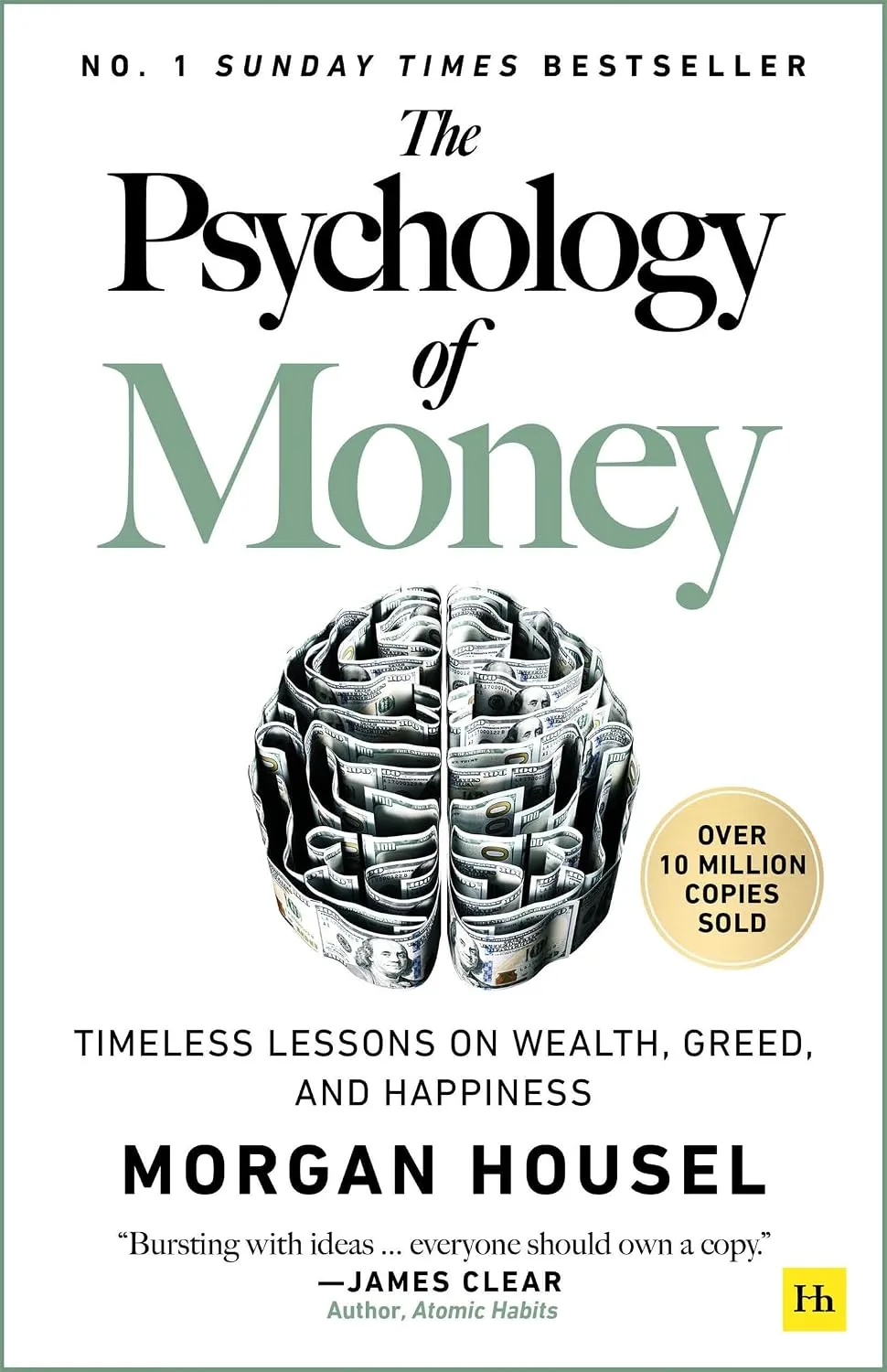
In The Psychology of Money, Morgan Housel argues that our experiences, emotions, expectations, fears, ambitions, and personal histories have an enormous influence on how we behave with money.
Understanding money therefore requires understanding people—including ourselves.
What This Book Is About
The Psychology of Money explores the behaviors and attitudes that influence financial success through a series of short, accessible lessons.
Rather than concentrating on specific investments or complicated financial strategies, Housel examines ideas such as risk, luck, compounding, saving, wealth, uncertainty, and the relationship between money and happiness.
One of the book's recurring themes is that doing well financially isn't necessarily about being exceptionally intelligent.
It's often about behavior.
Patience, avoiding unnecessary risk, controlling expectations, leaving room for things to go wrong, and allowing good decisions enough time to compound can matter more than finding the perfect financial strategy.
Why RVBN Recommends It
Business owners make financial decisions under uncertainty every day.
Should you expand? Hire someone? Buy equipment? Borrow money? Raise prices? Invest in marketing? Keep more cash available?
There often isn't one mathematically perfect answer.
The Psychology of Money encourages readers to think about the behavior behind those decisions—especially our relationship with risk, success, comparison, and the desire for more.
That's valuable for entrepreneurs because business success can actually create new financial risks if increasing revenue is always followed by increasing expenses, debt, expectations, or lifestyle.
Sometimes knowing what is enough is just as important as knowing how to get more.
Who Should Read This Book?
This book may be especially useful if:
You want to make better long-term financial decisions.
Financial uncertainty makes you uncomfortable.
You tend to compare your financial success with other people's.
Your spending increases whenever your income increases.
You're interested in investing but don't want a technical investing textbook.
You want to better understand your own attitudes toward money, risk, and success.
You're building a business with long-term financial independence in mind.
One Big Idea
Being wealthy and looking wealthy are not the same thing.
The expensive truck, large house, new equipment, impressive office, or luxury vacation you can see tells you that someone spent money.
It doesn't tell you how much money they still have.
Real wealth is often invisible because it consists of assets and resources that haven't been spent yet.
For a business owner, the same principle applies.
A company can look successful while having little cash, heavy debt, and almost no margin for something to go wrong.
Financial strength isn't always impressive from the outside.
Sometimes it simply looks like options, reserves, patience, and the ability to say no.
Put It Into Practice
Think about what financial success actually means to you.
Not what it looks like to other people.
Ask yourself:
How much financial reserve would make me feel secure?
How much risk am I taking simply because things have been going well?
If revenue dropped unexpectedly, how much room have I left for error?
Which expenses genuinely improve my life or business—and which primarily demonstrate success?
What does “enough” look like for me?
Then consider one of the book's most powerful themes: time.
Small advantages allowed to compound for long periods can produce extraordinary results.
That applies beyond investing.
Reputation compounds.
Relationships compound.
Knowledge compounds.
Good business systems compound.
Customer loyalty compounds.
You don't always need a dramatic breakthrough.
Sometimes the most valuable financial skill is making sensible decisions, avoiding catastrophic mistakes, and giving those decisions enough time to work.